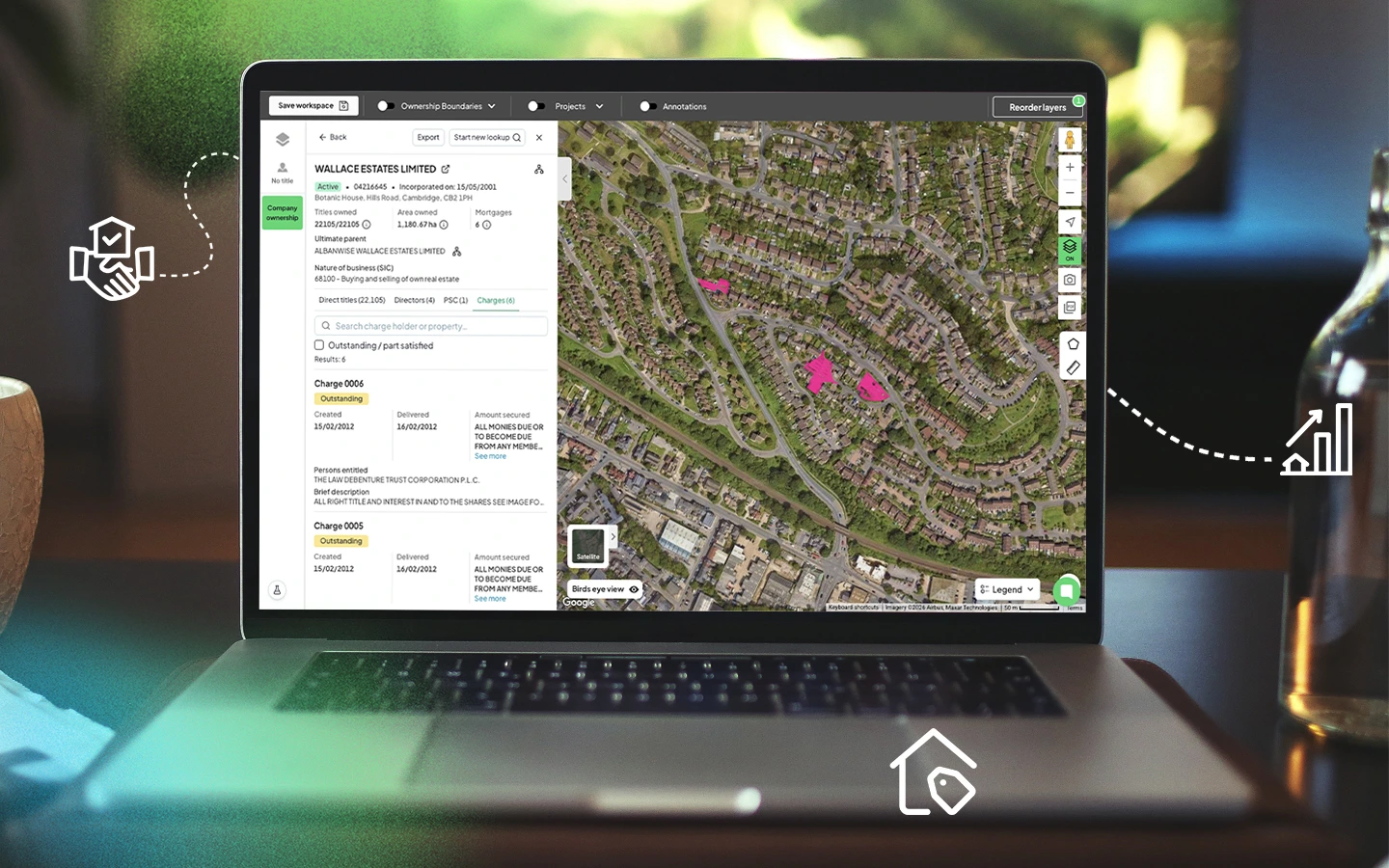


Before you approach a landowner or move ahead with a joint venture partner, it helps to know whether the company behind the site is carrying secured debt. A lender with a registered charge can restrict what happens to that asset next, and a company taking on new borrowing might be under more pressure than it looks from the outside. Finding that out has usually meant leaving your sourcing workflow altogether and digging through Companies House manually, one company at a time.
Searchland now brings that data straight onto the companies ownership page, in a new Charges tab.
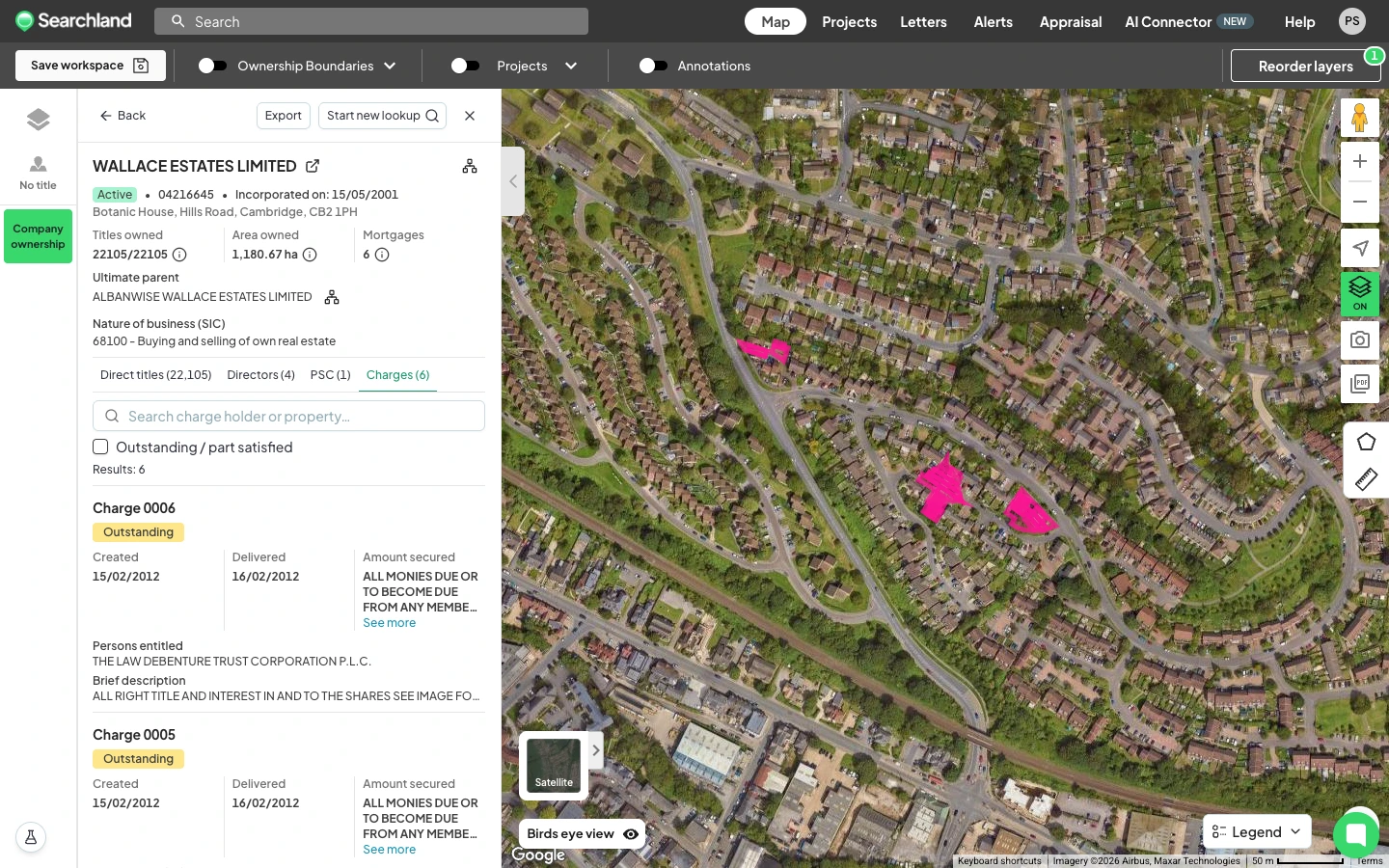
What Companies House charges show on the Charges tab
For any company, you can now see every charge it has recorded at Companies House:
- the charge code/charge number
- the status (Outstanding, Partly Satisfied, or Fully Satisfied)
- the created and delivered dates
- the amount secured, where Companies House holds one
- the person entitled (who the money is owed to)
- a brief description of the charge
You can filter by any word in the charge holder name or the description, or tick a box to show only Outstanding/Partly Satisfied charges - useful when you only care about live exposure, not historic borrowing that's already been repaid.
The mortgage information section on the ownership page also now shows Total amount and Outstanding total amount, where that data is available.
Why it matters
Investment management and lending teams. You can now see the official charge code and which institution holds it, directly against the property, without cross-referencing Companies House by hand. That makes it easier to identify properties financed by a specific lender, assess existing debt and security interests as part of due diligence, and build out targeted lending, refinancing, and acquisition prospect lists. Filtering results by lender across sourcing is coming next - for now, you can already filter charge holder and description text within a company's own Charges tab.
Sourcing off-market. A company with multiple outstanding charges, or a recent spike in secured borrowing, is a signal worth reading before you approach it - it can point to financial pressure that makes a landowner more open to a conversation, or explain why a site hasn't moved in years.
Due diligence before a deal. If you're about to enter a joint venture or acquisition, a fixed or floating charge means the lender may need to consent before that asset can be sold or transferred. Knowing that before terms are agreed, not after, changes how a deal gets structured.
Assessing a vendor or JV partner. Planning consultants and developers doing risk work on a counterparty now have a direct read on their secured debt position, without switching tools.
Where to find it
Read more about our company ownership data on the company ownership page. Companies House charges is a Pro feature - see how it fits into your plan on pricing, or book a demo to see it in action.