Our team of property and land experts are constantly analysing news from governments and industry leaders. We compile all our insights into one place.
Stay up-to-date with permitted development changes, new legislation and market movements.
What does a development feasibility study test that a site appraisal can’t? An Oxshott case study shows why four semis beat three detached homes.
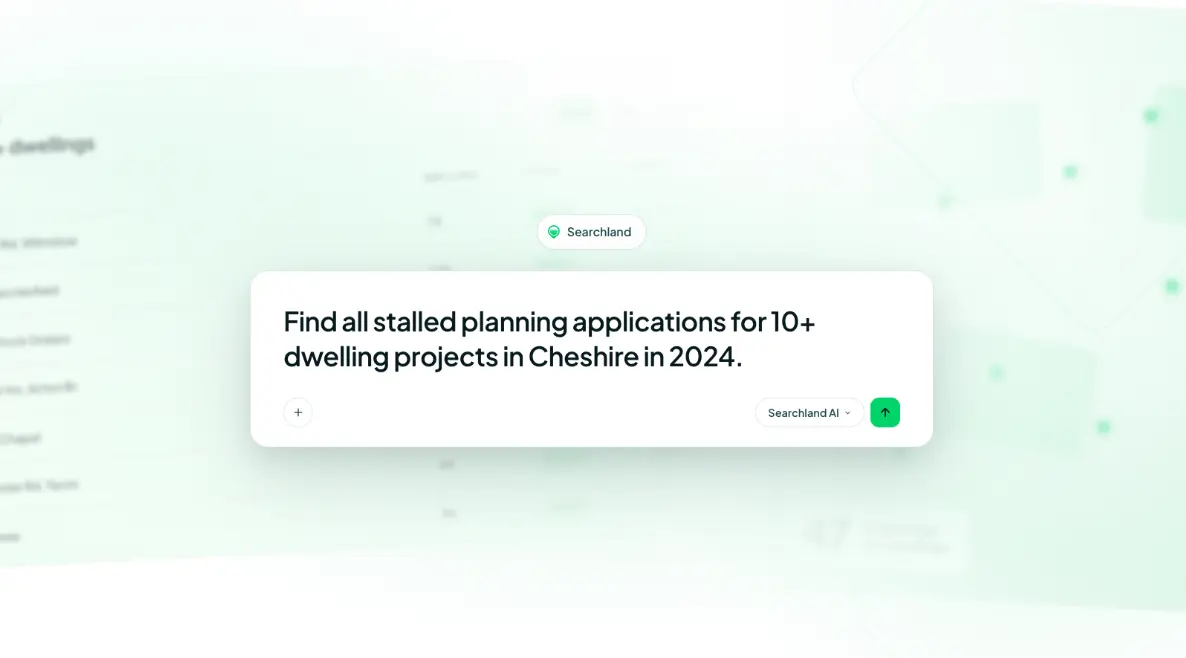
Searchland now has an AI assistant built into the platform. Describe the sites you're after in plain English - Ask AI finds them, puts them on the map, and saves them to your work.
Search every UK planning committee meeting in one place. Committee Explorer indexes meetings, decisions and councillor votes - transcribed, timestamped, and archived forever.
What settlement boundaries are, how councils use them under the 2026 NPPF, and how to find infill and exception-site opportunities inside and outside the line.
Searchland has a clear mission: to transform the way property professionals source sites. Here's the full story on where we come from and how we're helping developers across the UK.
A 2026 guide for UK data centre developers: source sites faster by evaluating power, planning and ownership data in minutes with Searchland.
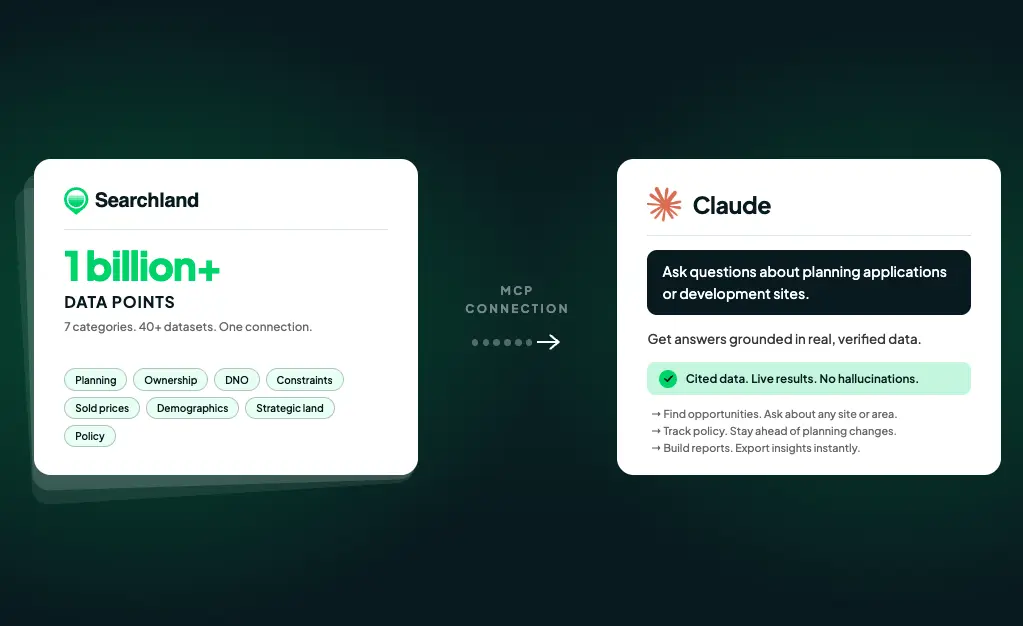
Connect Claude, ChatGPT, or Microsoft Copilot directly to live UK planning and land data — ownership records, planning history, constraints, live applications - and get sourced answers instead of hallucinated ones. Setup takes about five minutes. No developer needed.
MCP is the new standard letting AI assistants talk to your data. Here's what it means for site assessment, sourcing, and planning appraisals.
Searchland analysis reveals 823,574 potential homes near train stations in England, highlighting where development could be prioritised under proposed NPPF reforms - and how policy shifts could reshape land sourcing strategies.
Major housing schemes now take over 300 days to get planning approval - a 75% increase in a decade - highlighting that delays, not refusals, are the real bottleneck in the UK planning system.
The Renters Reform Bill presents the biggest shake-up England’s private rented sector has seen in decades. Expected to pass in 2025, Build to Rent (BTR) and Private Rented Sector (PRS) developers will need to rethink everything from unit design and management strategies to how they navigate the planning process.
Recent industry data reveals a £360 billion retrofit opportunity emerging in the UK property market. By 2050, over 29 million homes will require significant upgrades to meet strict new energy efficiency regulations coming into force. Retrofit development will quickly evolve from a niche concern to a major market opportunity.
Gone are the days when shared living meant cramped student houses or basic HMOs. Modern co-living has evolved into a sophisticated asset class attracting major institutional investment. Why? Because it solves real problems in our cities.
Permitted development rights might look easy, but we know that decisions can still go against you. At Searchland, we've compiled 3 case studies to show where others went wrong (or right) and what you can do to improve your chances.
Driven by university growth and rising international student numbers, the need for student accommodation is creating significant opportunities for developers and investors.
Build to Rent (BTR) has emerged as a major force in the UK property market. BTR’s surge in popularity is driven by changing demographics, shifting attitudes towards homeownership, and a growing demand for high-quality rental homes. The BTR rental sector is attracting billions of pounds in investment from developers and institutions alike.
For a property development business, the benefits of buying land off-market can outweigh the various barriers and risks involved. Buying land off-market means actively sourcing more sites than are publicly listed on land portals; a great way to build your portfolio and improve your ROI.
Sourcing and appraising development land in the UK requires using multiple site sourcing tools, from checking land ownership and planning history to assessing flood risk, environmental constraints, and site boundaries.
The UK’s Clean Power 2030 target—95% low-carbon electricity by the end of the decade - is reshaping the renewable energy landscape. But with grid congestion, planning hurdles, and soaring land competition, sourcing the right sites has never been tougher.
Well things have certainly changed since we wrote this article in early 2024. Not only do we now have a new Labour-led government but some huge changes to energy policy too. We'll keep the old stuff here for preservation and update the story as it develops.
Demand for electric vehicle charging sites is growing exponentially. Here we explore some of the best opportunities for developers, for building the future network of EV charge points in the UK.
The UK is facing a housing crisis of unprecedented proportions, with a deficit of 4.3 million homes and a projected increase in households to 26.9 million by 2043. To tackle this issue, Brickflow has released a white paper which delves deep into the problem and offers recommendations for a way forward.
All the planning approval rates and new build sales price information you need for the Kent Local Authority Districts.
See a company's ownership tree, run a director search, and find the land or property it owns - Companies House data built directly into Searchland.
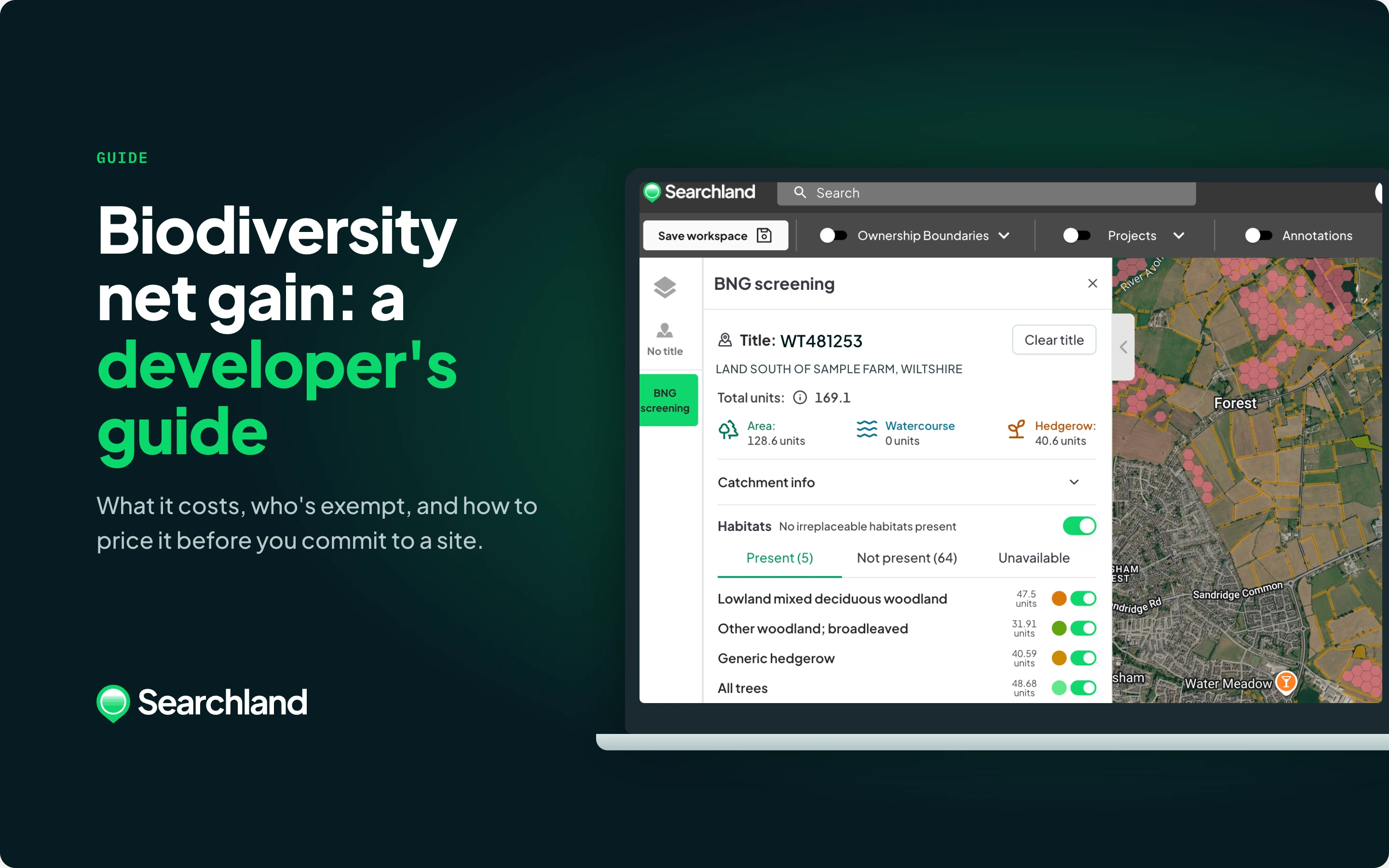
What biodiversity net gain actually means for developers: the 10% rule, the metric, exemptions, units and credits, and how to budget for it with confidence.
Model residual land value, GDV, profit and cashflow for any site with Searchland's appraisal tool - built on the data already in the platform.
See the charge code, lender, and secured debt behind any company on Searchland's ownership page — built for due diligence, refinancing, and acquisition prospecting.
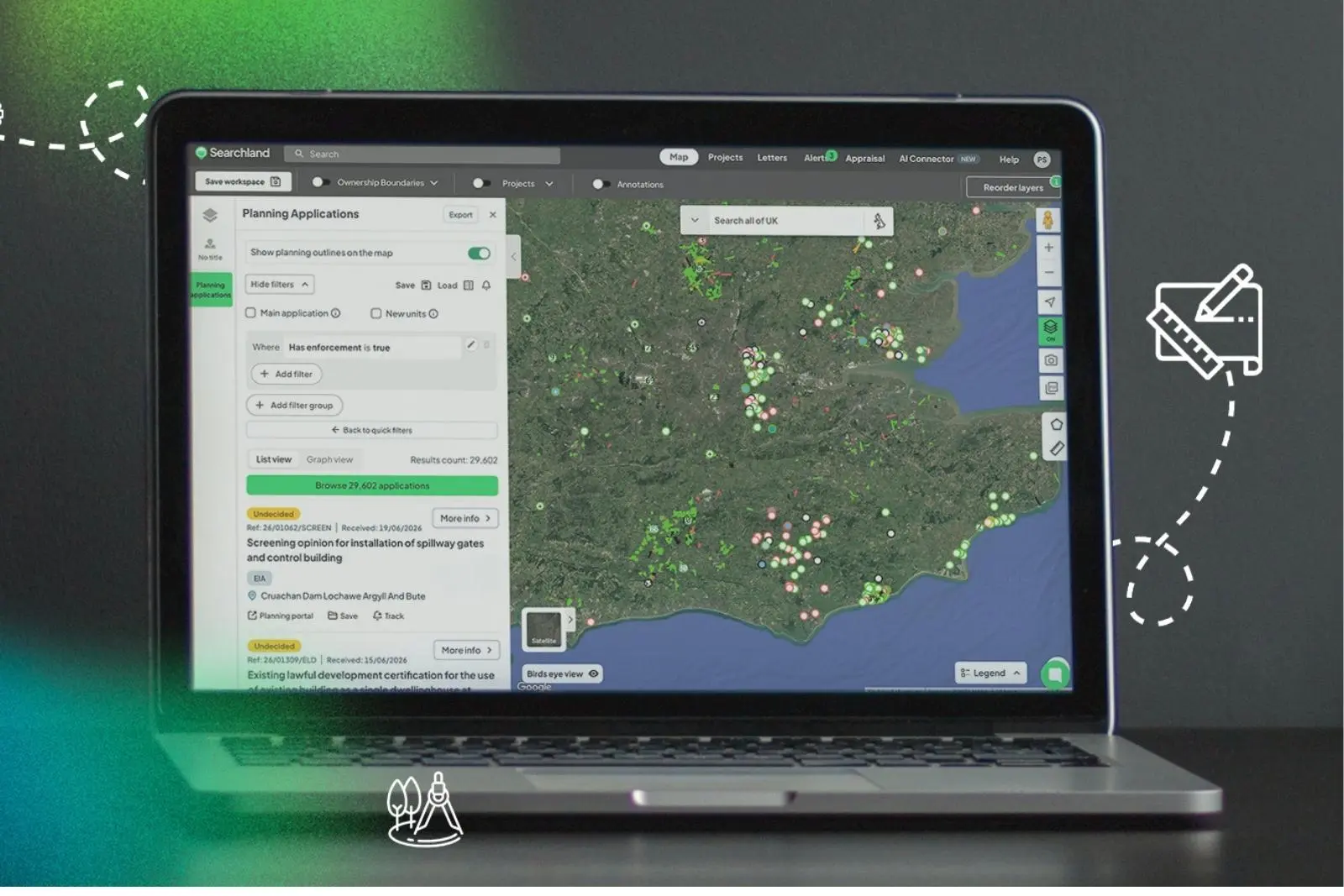
See planning enforcement notices against any application or title on Searchland - know who's breached planning rules before you commit to a site.