Our team of property and land experts are constantly analysing news from governments and industry leaders. We compile all our insights into one place.
Stay up-to-date with permitted development changes, new legislation and market movements.
Every public EV charger in the UK, now on your map - powered by Zapmap. Colour-coded by speed, built into sourcing. The first PropTech platform to bring it in.
Searchland now maps the political make-up of every constituency, ward and district across England, Wales and Scotland - so you can read the local political climate before you commit to a site.
Most land and planning platforms look alike in a walkthrough. The real differences only surface once you're using one daily. These are the ten questions worth putting to every platform on your shortlist - a fair scorecard you can apply to all of them, ours included.
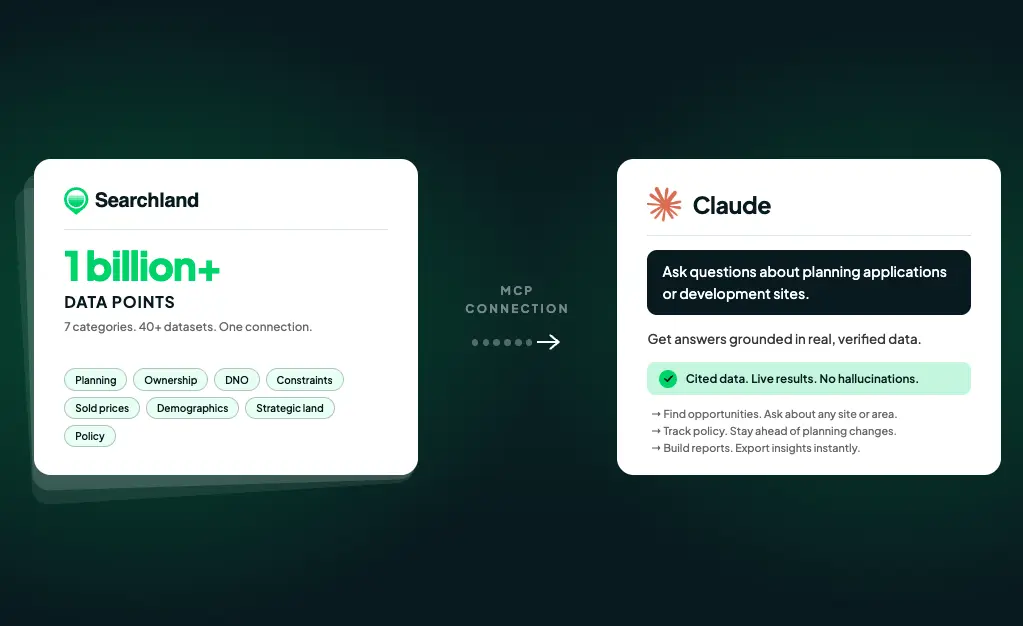
MCP is everywhere right now. But not all connectors are built the same - and in property and planning, the difference shows up fast. Here's what to look for, and how Searchland stacks up.
MCP is the new standard letting AI assistants talk to your data. Here's what it means for site assessment, sourcing, and planning appraisals.
Searchland now brings together over 3,000 Neighbourhood Plans across 300+ councils - surfacing hyper-local policy directly on the map, so site risk is visible from the very first click.
Searchland analysis reveals 823,574 potential homes near train stations in England, highlighting where development could be prioritised under proposed NPPF reforms - and how policy shifts could reshape land sourcing strategies.
Major housing schemes now take over 300 days to get planning approval - a 75% increase in a decade - highlighting that delays, not refusals, are the real bottleneck in the UK planning system.
Searchland has a clear mission: to transform the way property professionals source sites. Here's the full story on where we come from and how we're helping developers across the UK.
The Renters Reform Bill presents the biggest shake-up England’s private rented sector has seen in decades. Expected to pass in 2025, Build to Rent (BTR) and Private Rented Sector (PRS) developers will need to rethink everything from unit design and management strategies to how they navigate the planning process.
You’ve probably heard all about how the high street is taking a beating from online retailers. Well, in a surprising trend reversal, we’re now seeing major e-commerce brands expanding into physical spaces.
Remember when finding development sites meant endless hours driving around neighbourhoods and sifting through old planning records? Finding those hidden gems took hours of work and a stroke of luck. Well, those days are over.
The post-COVID shift to hybrid working has left thousands of office buildings at low occupancy or totally empty. Meanwhile, the high street continues to struggle, and the UK still faces a major housing shortage.
What is greenfield land? This often used planning term does not even have an official definition in NPPF guidelines. Here we explore where it fits in the planning landscape, including pros and cons for development on both urban and rural greenfield sites. With some strategic thinking, and access to the right data, greenfield can present a viable development prospect.
The most successful property developers have one thing in common. They all know how to find the best opportunities before they hit the market. In today’s competitive property landscape, waiting for properties to be listed publicly often means missing out on the best deals.
Finding suitable land for development takes more than just luck. It requires a strategic, data-driven approach. Whether you’re a seasoned developed or just starting out, you’ll find a new way to source UK development opportunities right here.
Recent industry data reveals a £360 billion retrofit opportunity emerging in the UK property market. By 2050, over 29 million homes will require significant upgrades to meet strict new energy efficiency regulations coming into force. Retrofit development will quickly evolve from a niche concern to a major market opportunity.
Proposed NPPF reforms could introduce a “default yes” approach to development near train stations. We’ve analysed 1,000+ locations across England to identify where the biggest opportunities sit - and how to get ahead before policy is finalised.
Sourcing and appraising development land in the UK requires using multiple site sourcing tools, from checking land ownership and planning history to assessing flood risk, environmental constraints, and site boundaries.
Padel court development is booming across the UK, with planning applications up 113% in 2024. At Searchland, we've uncovered nearly 17,000 sites ready for padel investment. Here's where the real opportunity lies for landowners, developers and investors.
The UK’s Clean Power 2030 target—95% low-carbon electricity by the end of the decade - is reshaping the renewable energy landscape. But with grid congestion, planning hurdles, and soaring land competition, sourcing the right sites has never been tougher.
Well things have certainly changed since we wrote this article in early 2024. Not only do we now have a new Labour-led government but some huge changes to energy policy too. We'll keep the old stuff here for preservation and update the story as it develops.
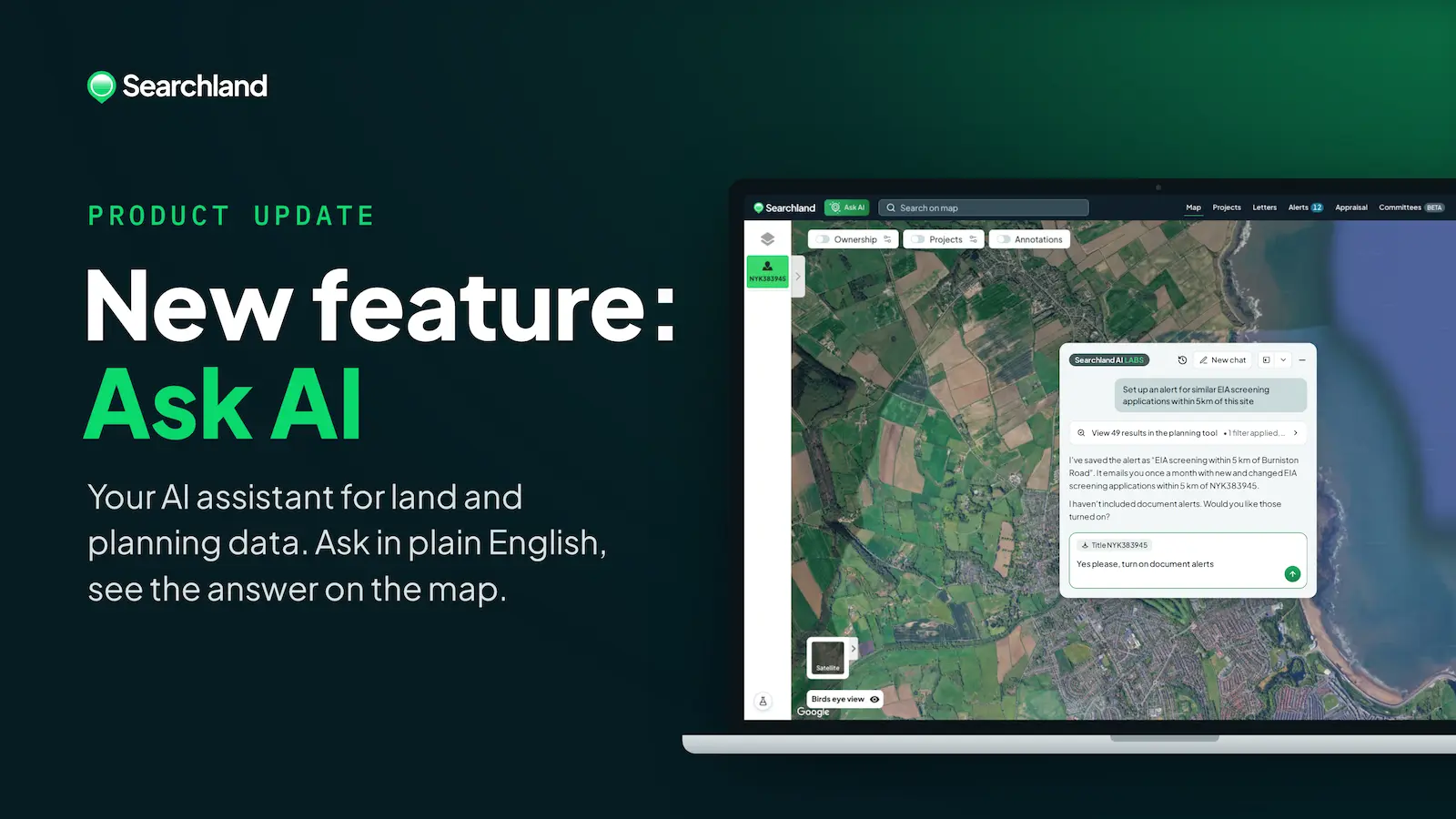
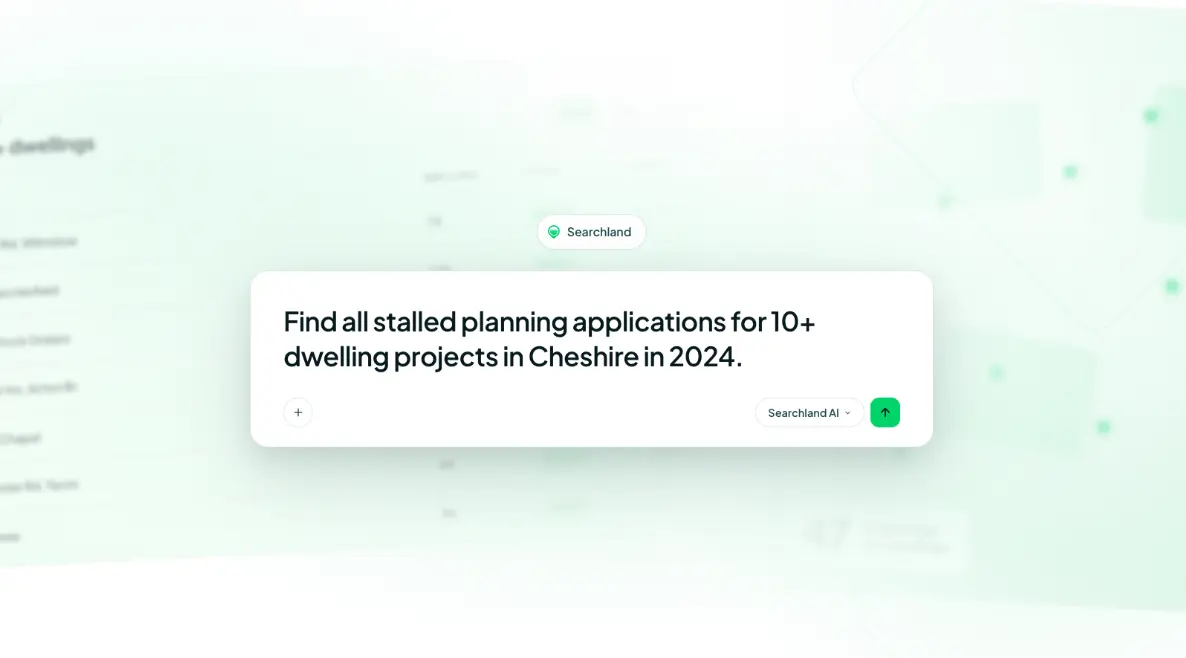
We’ve all seen AI pop up in every tool, whether it adds value or not. But honestly, we’re excited about this one. We believe it’s the most innovative and genuinely helpful use of AI yet. With our new tool, land sourcing is becoming faster, easier, and more intuitive.
Our company ownership tool has been upgraded. Now, you can quickly and efficiently see a company’s ownership tree, what land and property it owns or leases, and who runs them in seconds.
Explore live and completed commercial property sales and lettings listings directly in Searchland, enhanced with up-to-date comparables, building histories, lease events, ownership information, availability and more
Across the UK, hundreds of thousands of Tree Protection Orders are in place, covering a wide array of trees in both urban and rural settings - our new dataset can help you avoid protracted legal battles.
With Biodiversity Net Gain becoming a requirement for almost every development project in England, we’ve developed a comprehensive tool to help make the process as simple as possible.
Our highly anticipated traffic and footfall data is here - giving you a unique and industry-leading overview of vehicle and pedestrian mobility volume across the UK.