Our team of property and land experts are constantly analysing news from governments and industry leaders. We compile all our insights into one place.
Stay up-to-date with permitted development changes, new legislation and market movements.
What happens after planning approval? This update shows stakeholder comments, objections and real-world site activity, helping you track whether developments are built, stalled or completed.
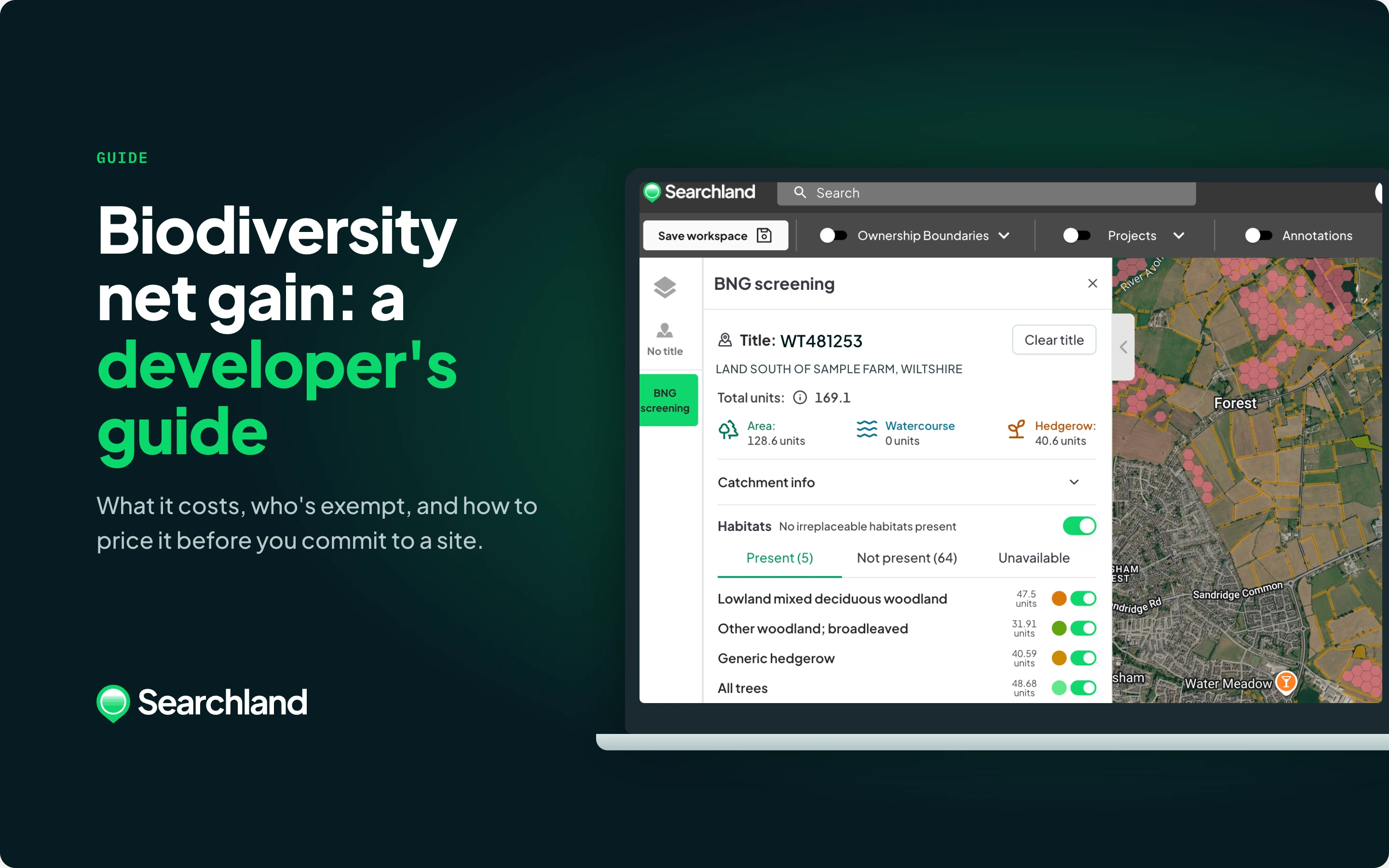
It’s the Biodiversity Net Gain Proptech partnership you’ve been waiting for! Together with GAIA, the UK's leading BNG marketplace, we've developed a comprehensive and cutting-edge tool to transform how you engage with BNG projects.
Our highly anticipated traffic and footfall data is here - giving you a unique and industry-leading overview of vehicle and pedestrian mobility volume across the UK.
Finding profitable development opportunities, especially larger-scale ones, can take time and effort. Land Assembly provides ambitious developers the means to make those opportunities a reality.
Whether you work in the energy sector or are a developer exploring the feasibility of connecting new projects to the National Grid - our DNO tool is an invaluable resource you need to be using.
Agricultural land is designated land solely used for activities like growing crops or rearing livestock. However, it can also be set aside as “greenfield” for development. So if you are looking for sites in rural areas, this one is for you.
Brownfield sites are usually defined as any land that has already been built on, while greenfield land has yet to be developed. But contrary to what you might assume, not all built-on sites count as brownfield. What’s more, brownfield and greenfield sites can both be found in urban and rural areas.
It's designed to stop developers attempting to reduce their share of costs for local infrastructure, and affordable housing, when they start new projects. This includes costs across roads, GP surgeries and schools, shared with councils.
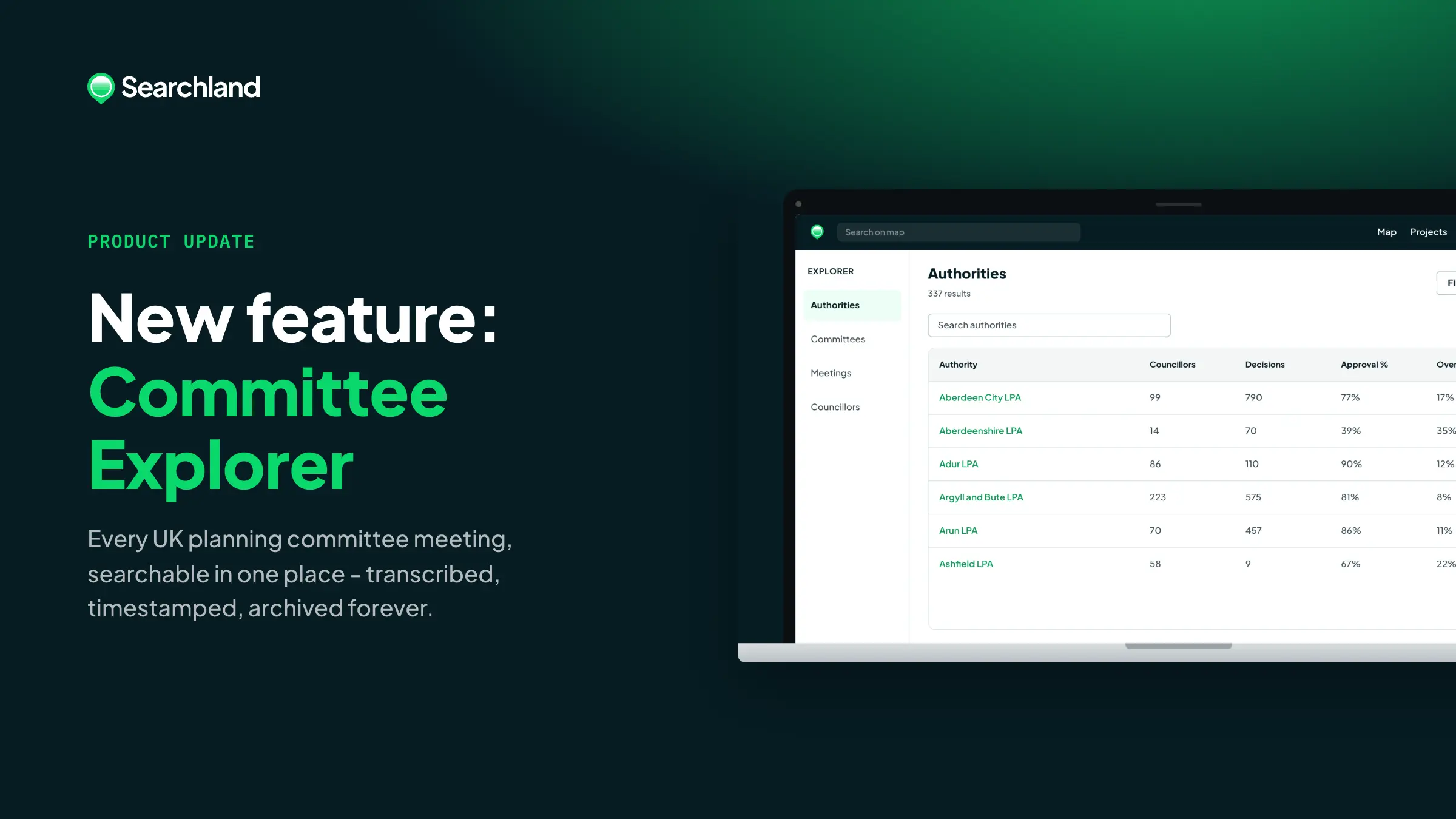
UK planning application approval rates by local authority from 2011–2026 - including live 2026 decisions. Compare councils, trends and sectors in one national view.
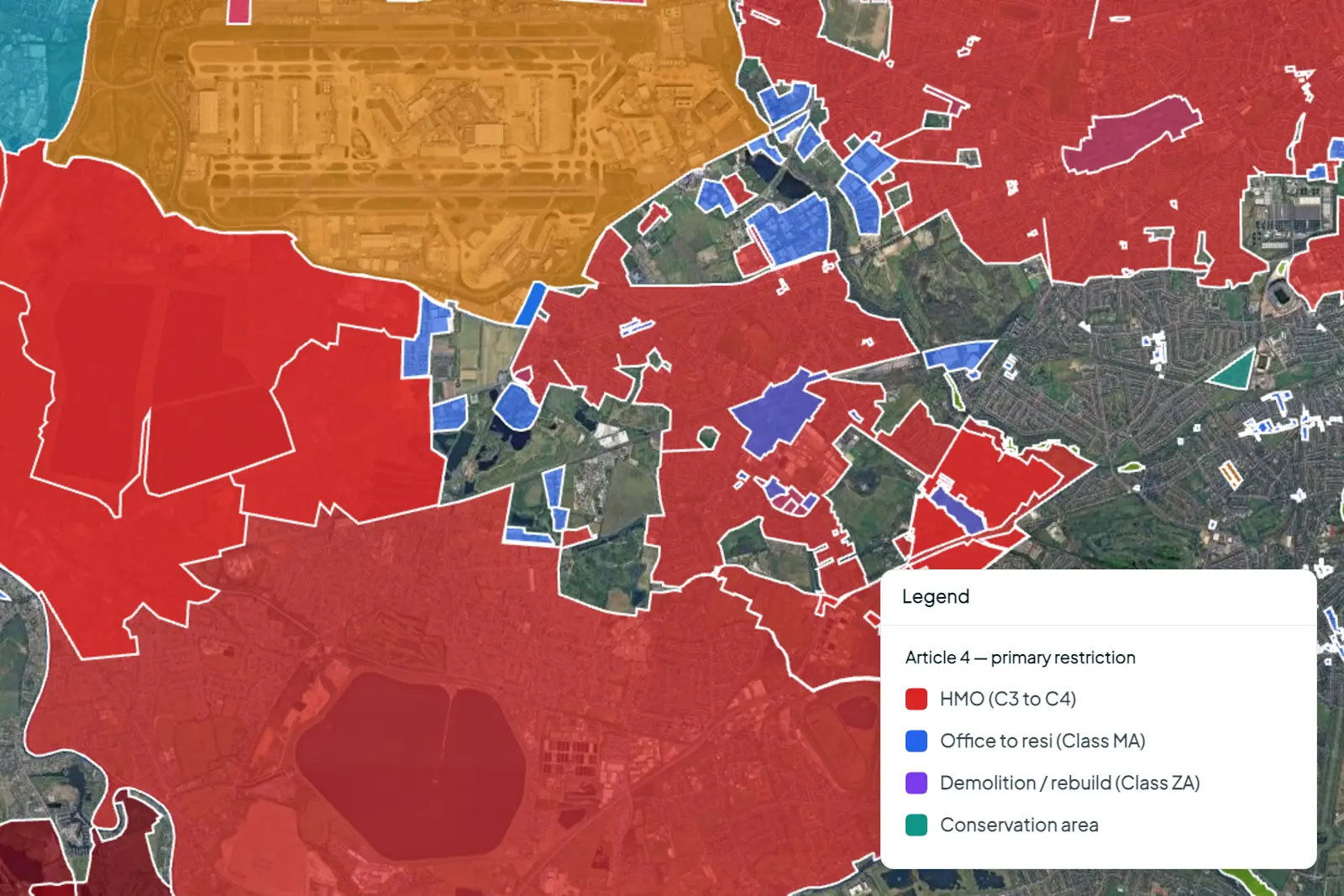
Permitted development rights allow certain types of development to proceed without full planning permission. Learn how they work and why they matter for developers.
A practical guide to the call for sites process, explaining how councils assess land and how developers use CFS to build long-term pipeline.
Class R rules changed in May 2024, expanding the commercial uses allowed on agricultural units. Understand what’s now permitted and how to assess viable opportunities.
Class Q allows agricultural buildings to be converted into up to 10 homes without full planning permission. Learn the rules, limits, and how developers are sourcing opportunities today.
Class MA permitted development allows Class E buildings to be converted into homes without full planning permission. Learn the rules, 2024 changes and key considerations.
Proposed NPPF reforms could introduce a “default yes” approach to development near train stations. We’ve analysed 1,000+ locations across England to identify where the biggest opportunities sit - and how to get ahead before policy is finalised.
Sourcing and appraising development land in the UK requires using multiple site sourcing tools, from checking land ownership and planning history to assessing flood risk, environmental constraints, and site boundaries.
Padel court development is booming across the UK, with planning applications up 113% in 2024. At Searchland, we've uncovered nearly 17,000 sites ready for padel investment. Here's where the real opportunity lies for landowners, developers and investors.
The UK’s Clean Power 2030 target—95% low-carbon electricity by the end of the decade - is reshaping the renewable energy landscape. But with grid congestion, planning hurdles, and soaring land competition, sourcing the right sites has never been tougher.
Well things have certainly changed since we wrote this article in early 2024. Not only do we now have a new Labour-led government but some huge changes to energy policy too. We'll keep the old stuff here for preservation and update the story as it develops.
Demand for electric vehicle charging sites is growing exponentially. Here we explore some of the best opportunities for developers, for building the future network of EV charge points in the UK.
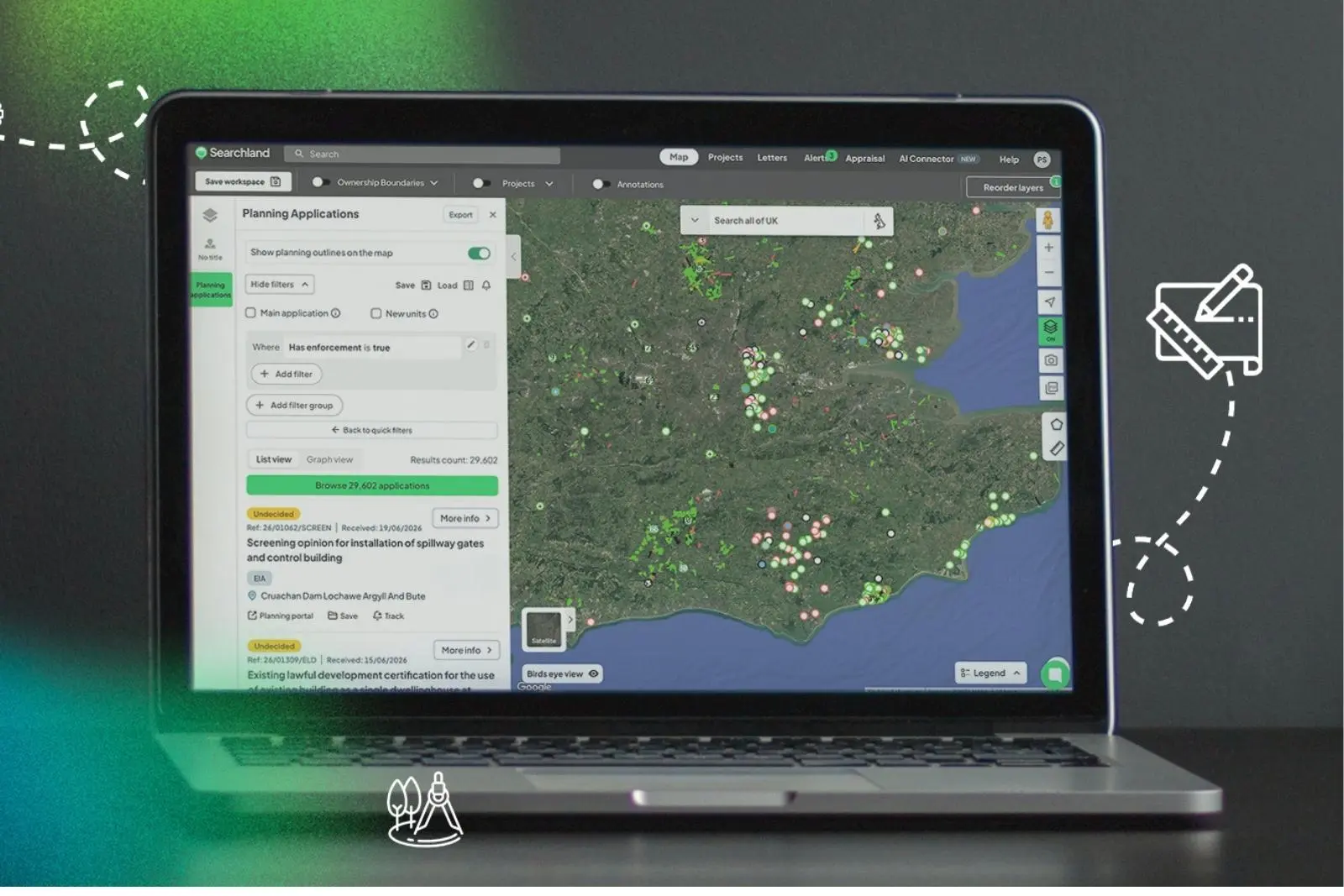
Searchland’s Planning Tool brings together 23 million+ UK applications into one searchable, filterable, map-based platform - so land and planning teams can quantify authority behaviour, assess risk properly, and move with confidence instead of instinct.
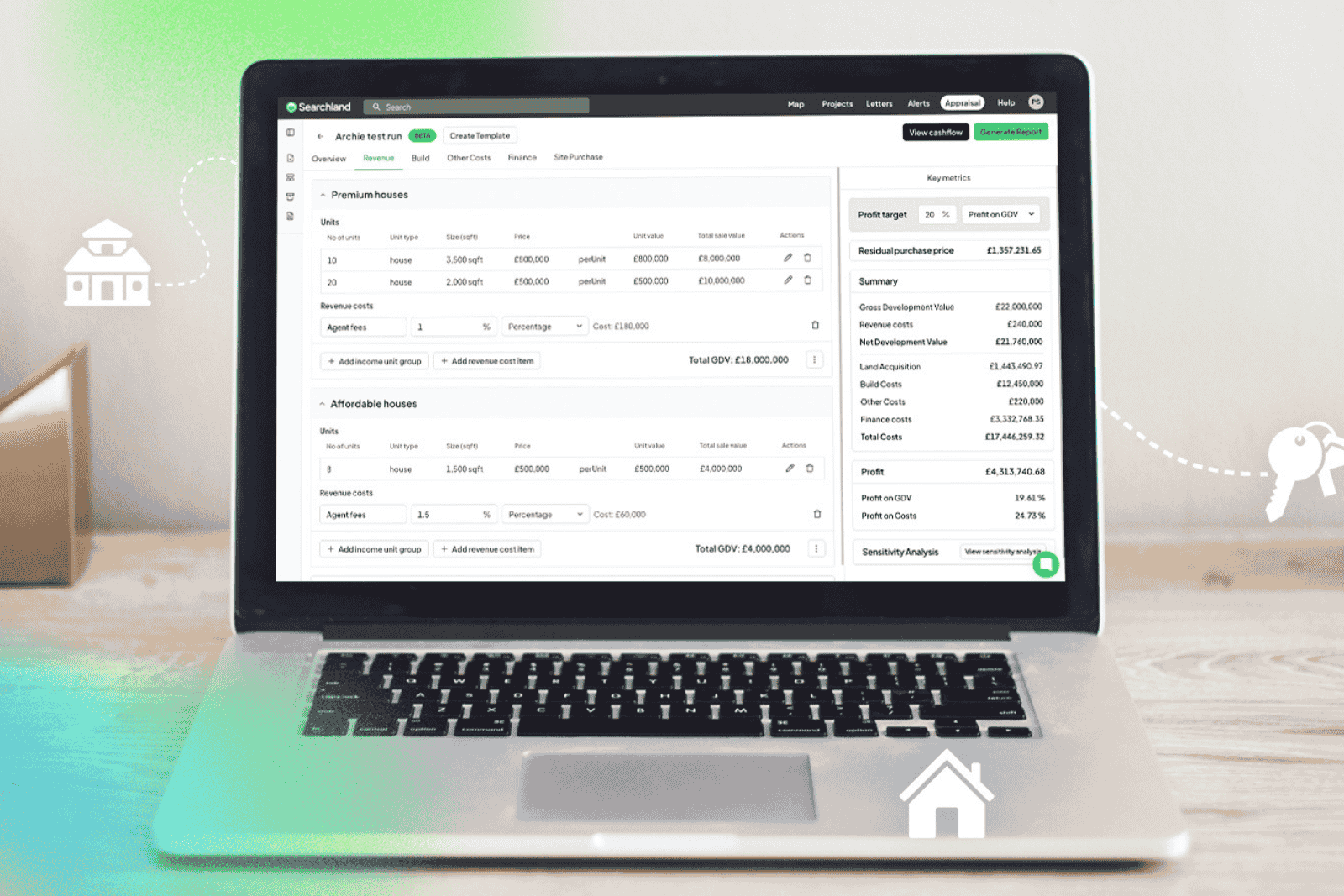
Developers move fastest when data, insight, and decisions live in one place. Searchland’s new appraisal tool delivers exactly that - turning the entire acquisition workflow into a single, seamless motion.
Messy titles. Confusing occupancies. Disconnected data. The Buildings tool gives you a clear view of what’s really inside any structure - with searchable insights across every building in the UK.
Sourcing elderly care and care home opportunities just got easier. Searchland’s new Elderly care tool gives Searchland users deep insights into 11,000+ care homes, making area analysis and opportunity spotting faster than ever.
For the first time, get visibility on land sale prices helping you understand uplift, spot opportunity, and compare land values with context.