Our team of property and land experts are constantly analysing news from governments and industry leaders. We compile all our insights into one place.
Stay up-to-date with permitted development changes, new legislation and market movements.
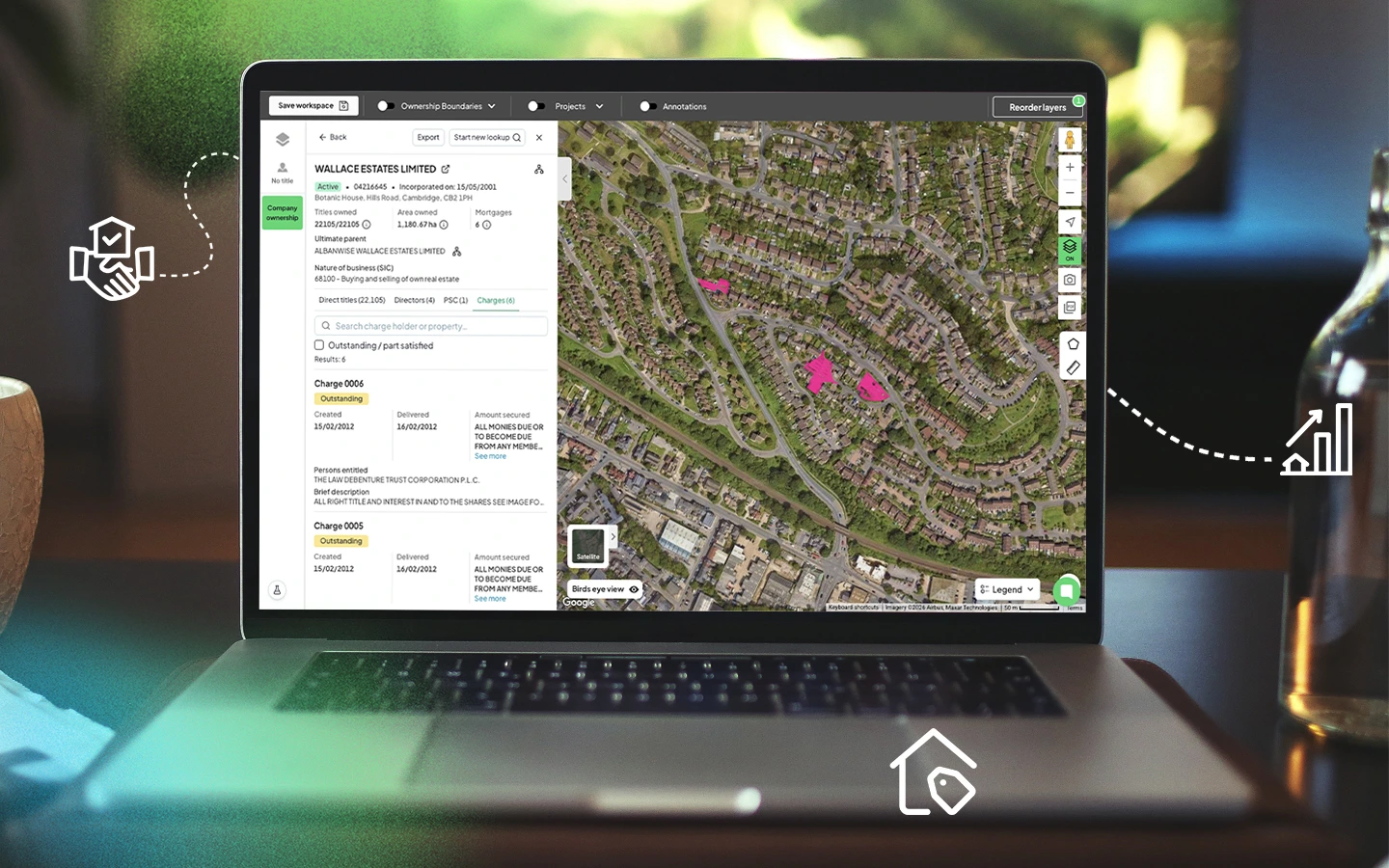
See the charge code, lender, and secured debt behind any company on Searchland's ownership page — built for due diligence, refinancing, and acquisition prospecting.
See soil type, depth and peat coverage - Soilscapes data for any UK site, directly on the map.
From the outset, our mission at Searchland has been fuelled by one clear purpose: to revolutionise how developers, entrepreneurs, planners and architects source and assess sites at scale. Our integration with Rightmove's data brings this vision into sharper focus than ever.
The UK is facing a housing crisis of unprecedented proportions, with a deficit of 4.3 million homes and a projected increase in households to 26.9 million by 2043. To tackle this issue, Brickflow has released a white paper which delves deep into the problem and offers recommendations for a way forward.
Looking for a land-sourcing platform with live rental and sales listings? Searchland is levelling up with a groundbreaking integration with Rightmove's on-market data.
Nutrient neutrality is a means of ensuring that a plan or project does not add to existing nutrient burdens so there is no net increase in nutrients as a result of the plan or project.
After weeks of speculation, the Prime Minister finally announced the scrapping of the northern leg of HS2. But what does this mean for the projects that received planning permission?
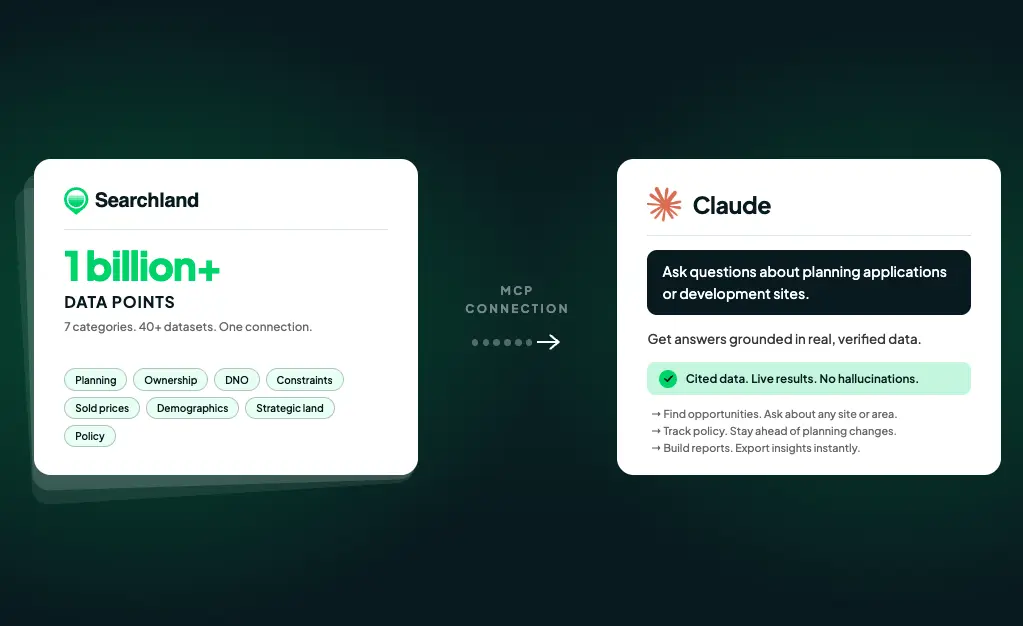
Connect Claude, ChatGPT, or Microsoft Copilot directly to live UK planning and land data — ownership records, planning history, constraints, live applications - and get sourced answers instead of hallucinated ones. Setup takes about five minutes. No developer needed.
MCP is the new standard letting AI assistants talk to your data. Here's what it means for site assessment, sourcing, and planning appraisals.
Searchland analysis reveals 823,574 potential homes near train stations in England, highlighting where development could be prioritised under proposed NPPF reforms - and how policy shifts could reshape land sourcing strategies.
Major housing schemes now take over 300 days to get planning approval - a 75% increase in a decade - highlighting that delays, not refusals, are the real bottleneck in the UK planning system.
Searchland has a clear mission: to transform the way property professionals source sites. Here's the full story on where we come from and how we're helping developers across the UK.
The Renters Reform Bill presents the biggest shake-up England’s private rented sector has seen in decades. Expected to pass in 2025, Build to Rent (BTR) and Private Rented Sector (PRS) developers will need to rethink everything from unit design and management strategies to how they navigate the planning process.
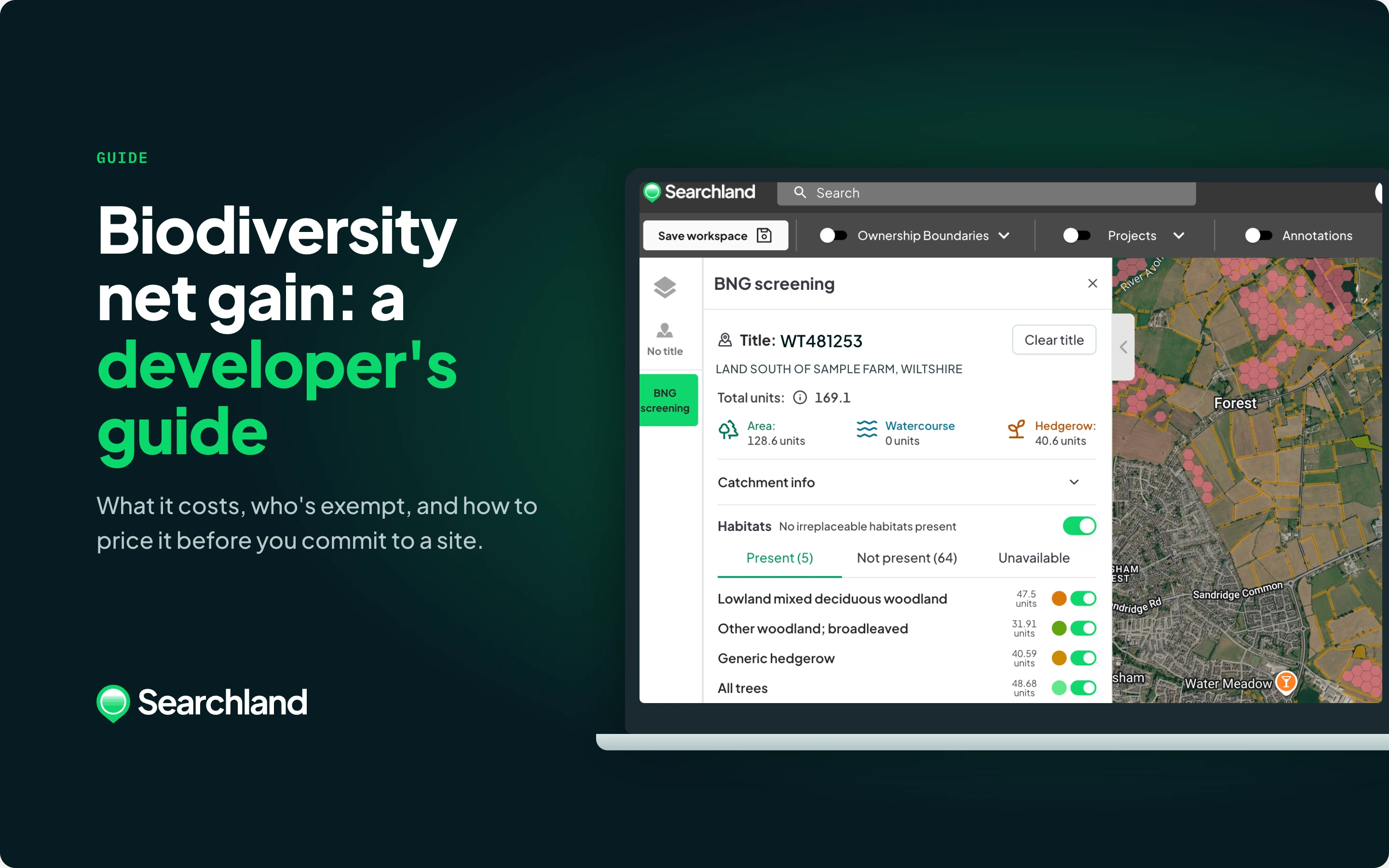
Discover the six Biodiversity Net Gain (BNG) takeaways developers should understand in order to reduce negative impacts on developments, whilst complying with the new policy.
As the UK’s transition to a low-carbon economy continues, the demand for reliable, flexible energy storage solutions has never been greater. Battery Energy Storage Systems (BESS), play an important role in balancing the grid, integrating renewable energy, and ensuring a stable power supply.
Build to Rent (BTR) has emerged as a major force in the UK property market. BTR’s surge in popularity is driven by changing demographics, shifting attitudes towards homeownership, and a growing demand for high-quality rental homes. The BTR rental sector is attracting billions of pounds in investment from developers and institutions alike.
Biodiversity Net Gain policy is now mandatory for most development projects in England. But what does a good BNG report look like, what projects are being approved or rejected and what BNG solutions are developers proposing?
Biodiversity Net Gain was introduced through the world-leading Environment Act and is a fundamental step in helping the UK reduce environmental decline by 2030
Agricultural land is designated land solely used for activities like growing crops or rearing livestock. However, it can also be set aside as “greenfield” for development. So if you are looking for sites in rural areas, this one is for you.
How a specialist block agency finds off-market MUFBs: the ownership, leasehold and EPC filters used to source unsplit multi unit freehold blocks.
Sourcing a site is only half the job - the other half is getting a lender comfortable with the numbers. We hosted a webinar with Andrew Fraser, Chief Commercial Officer at Assetz Capital, to break down exactly how an agile lender's credit team assesses a deal, from first read to term sheet.
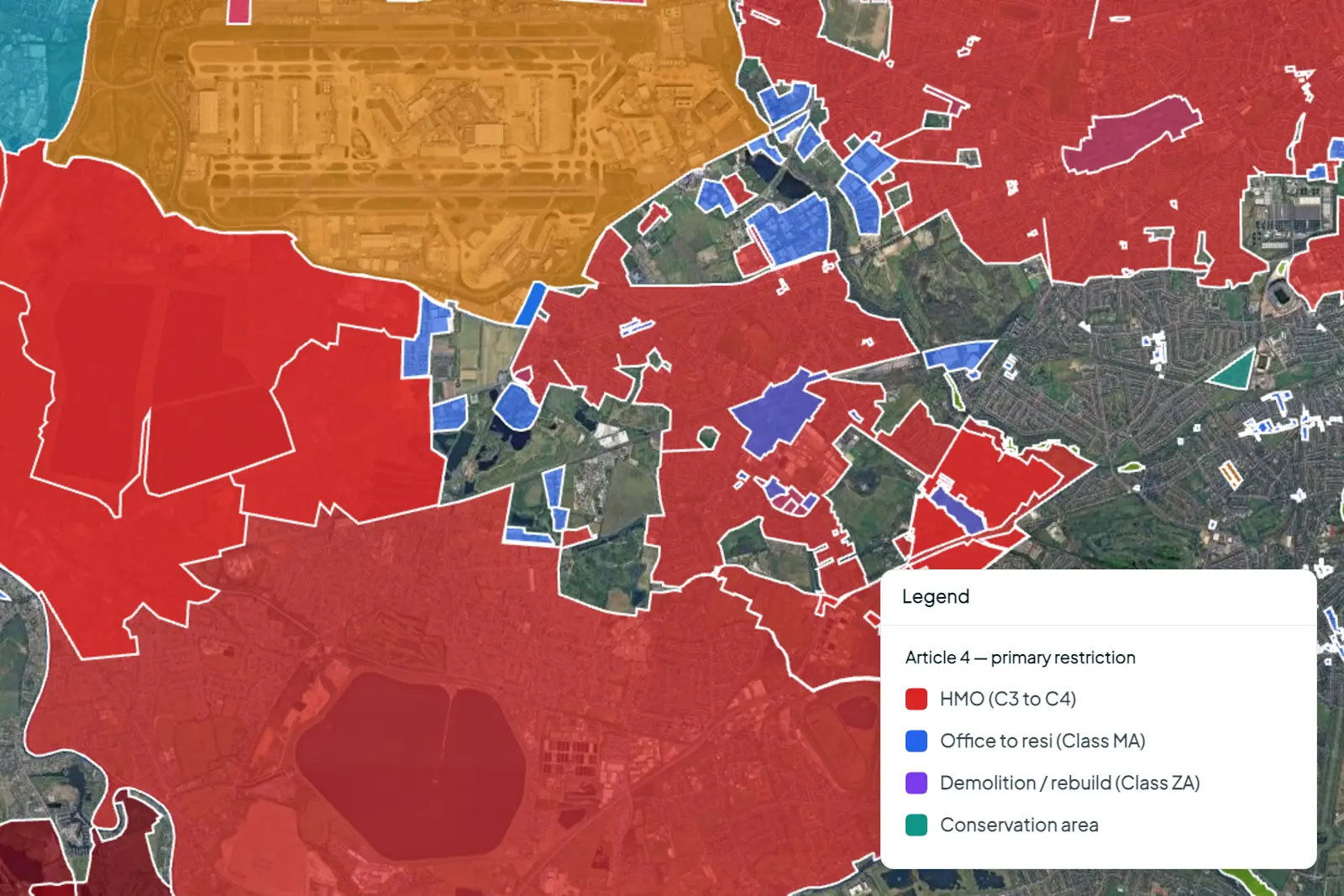
Article 4 Directions quietly withdraw permitted development rights, and they cover the majority of England's councils. Searchland's Article 4 data is now searchable by restriction type, PD right and use class.
MCP is everywhere right now. But not all connectors are built the same - and in property and planning, the difference shows up fast. Here's what to look for, and how Searchland stacks up.
Proposed NPPF reforms could introduce a “default yes” approach to development near train stations. We’ve analysed 1,000+ locations across England to identify where the biggest opportunities sit - and how to get ahead before policy is finalised.
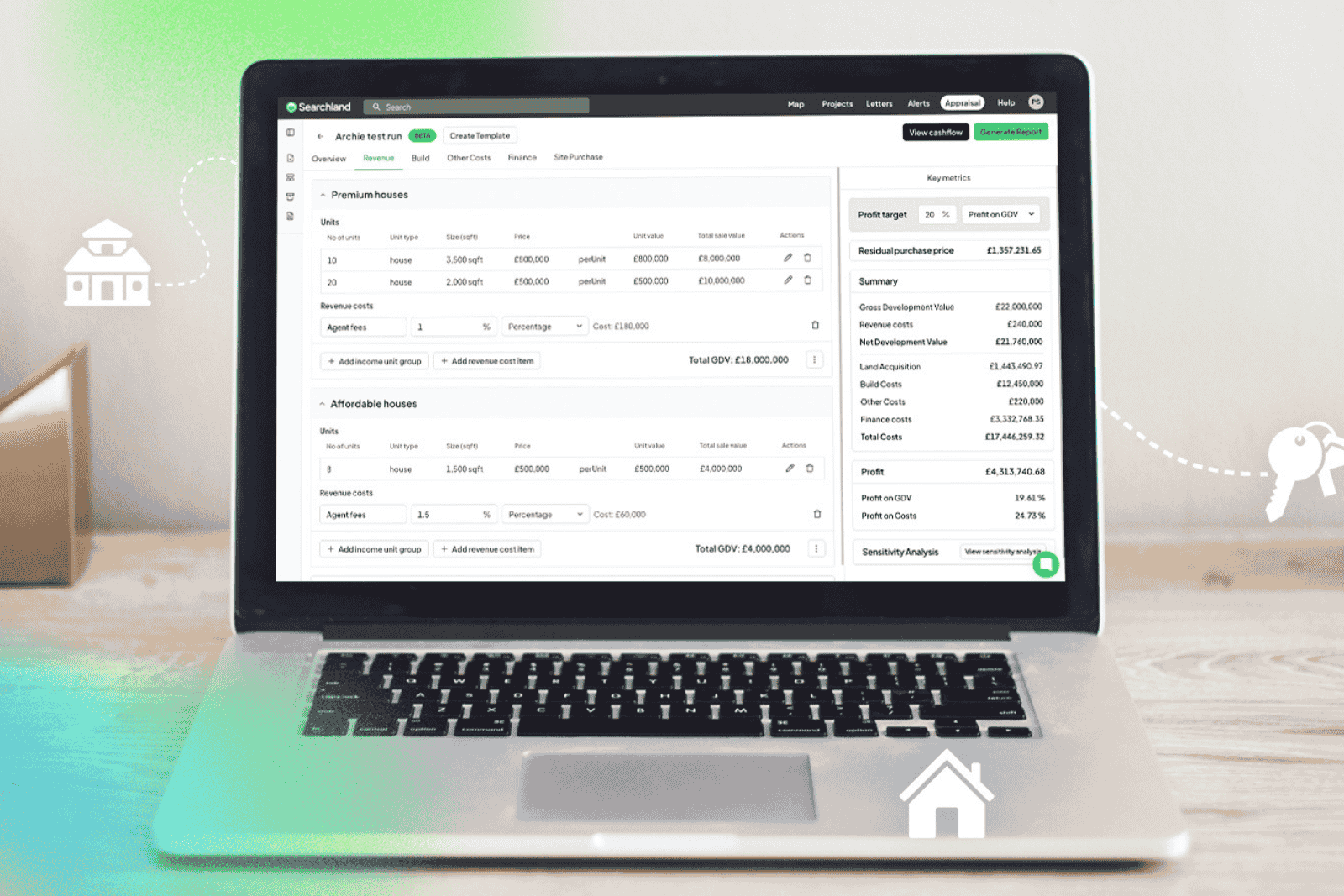
Sourcing and appraising development land in the UK requires using multiple site sourcing tools, from checking land ownership and planning history to assessing flood risk, environmental constraints, and site boundaries.
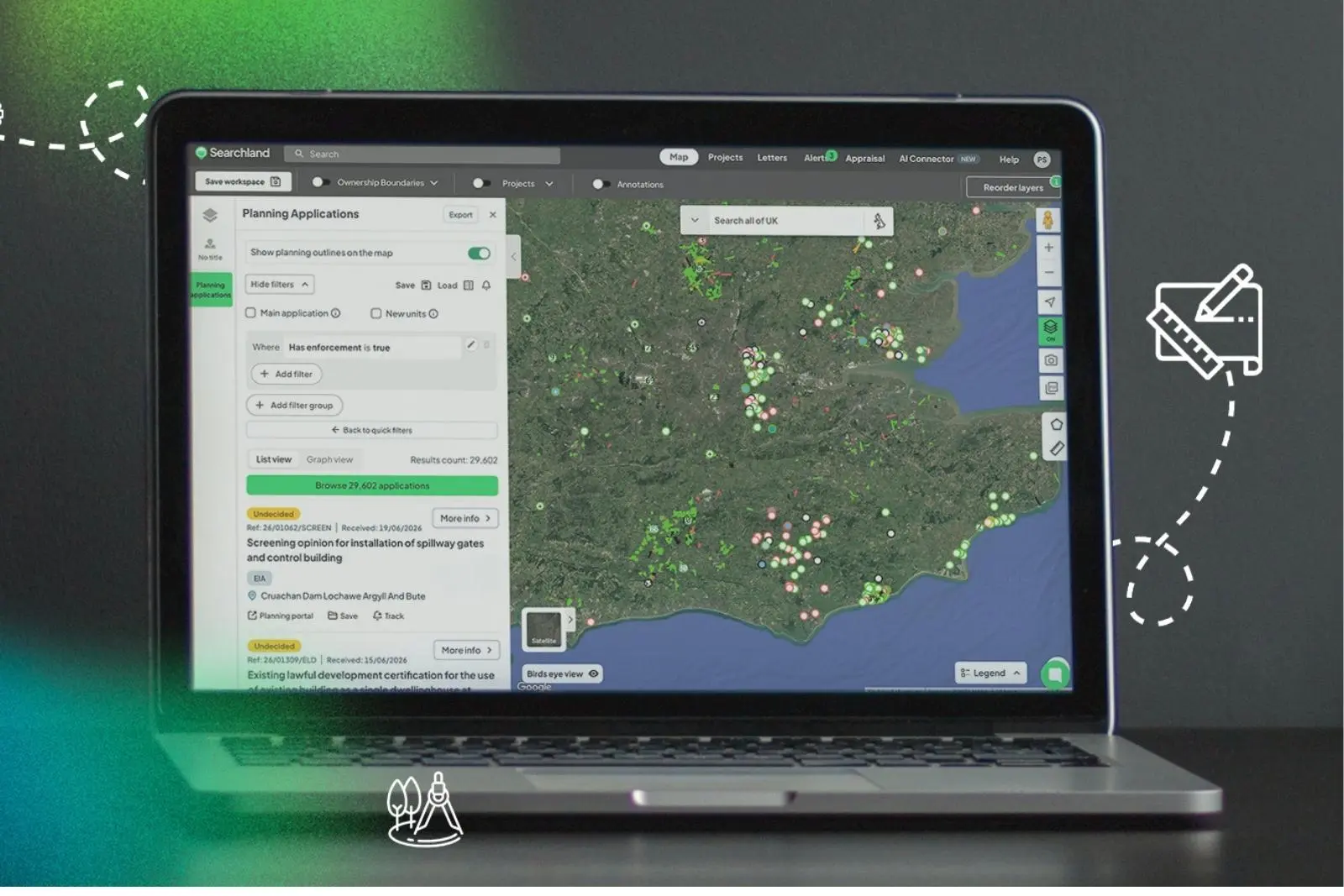
See planning enforcement notices against any application or title on Searchland - know who's breached planning rules before you commit to a site.
See every public EV charger in the UK on your map, powered by Zapmap - colour-coded by speed and built directly into site sourcing.
Searchland now maps the political make-up of every constituency, ward and district across England, Wales and Scotland - so you can read the local political climate before you commit to a site.
Over 3,000 Neighbourhood Plans across 300+ councils, now surfaced directly on the map - so hyper-local planning policy is visible from the first click.
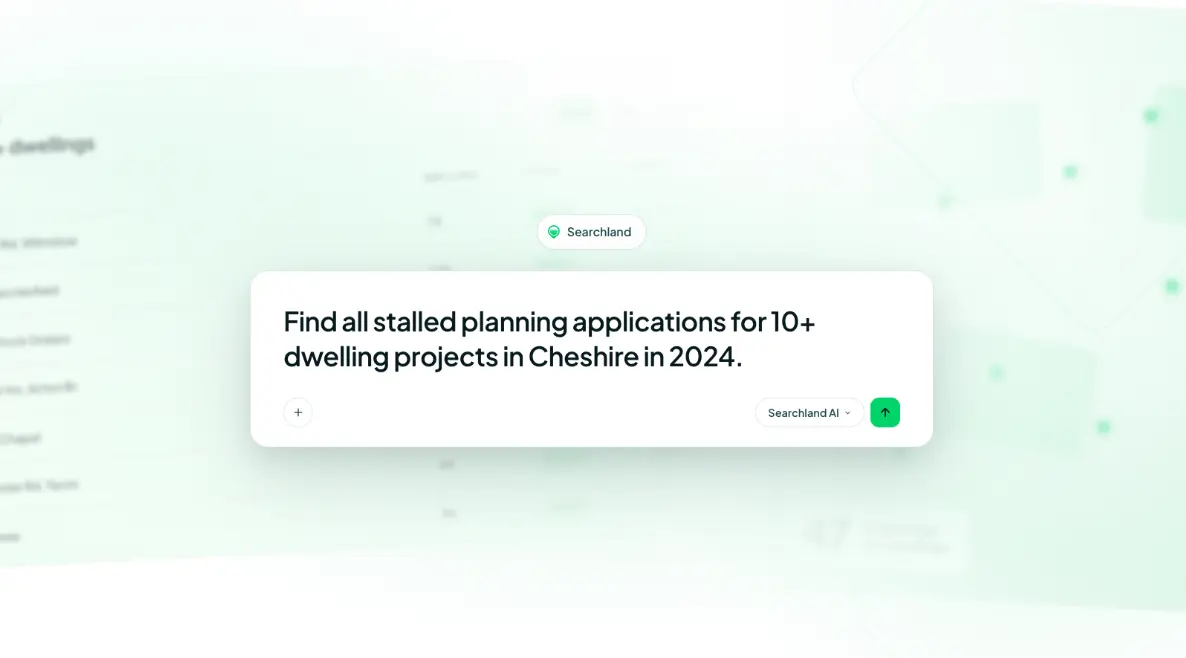
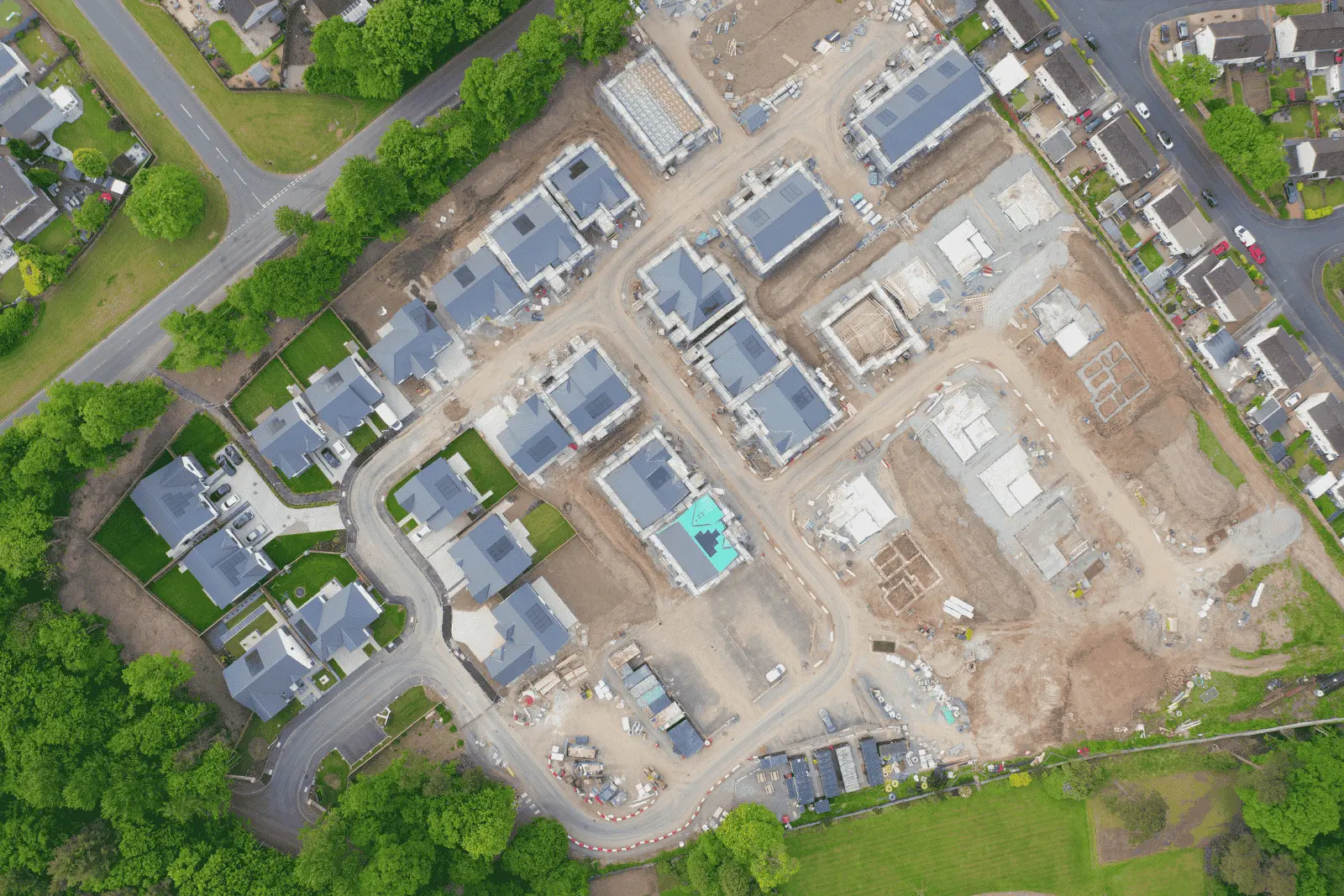
See planning comments, objections and real-world site activity for any application - track whether developments are built, stalled or completed.